Contents
In short
The Ourika Valley by car from Marrakech is an easy self-drive day trip. A paved road leads south-east to Tnine Ourika, then follows the river through Aghbalou to Setti Fatma, around 62 to 65 km from the city. Allow about an hour and a half each way, park in Setti Fatma and walk to the waterfalls.
This valley is the trip we recommend most for a first day out of Marrakech. The road is paved all the way, the scenery changes quickly from the flat Haouz plain to the gorges of the High Atlas, and there are good places to stop for lunch by the river. We are Choumacars, a car rental agency in Marrakech open 24/7. This guide explains the route step by step, the villages along the way, the right car, parking in Setti Fatma, the walk to the waterfalls and the weather risk that every visitor should know about.
What is the Ourika Valley and why visit it by car?
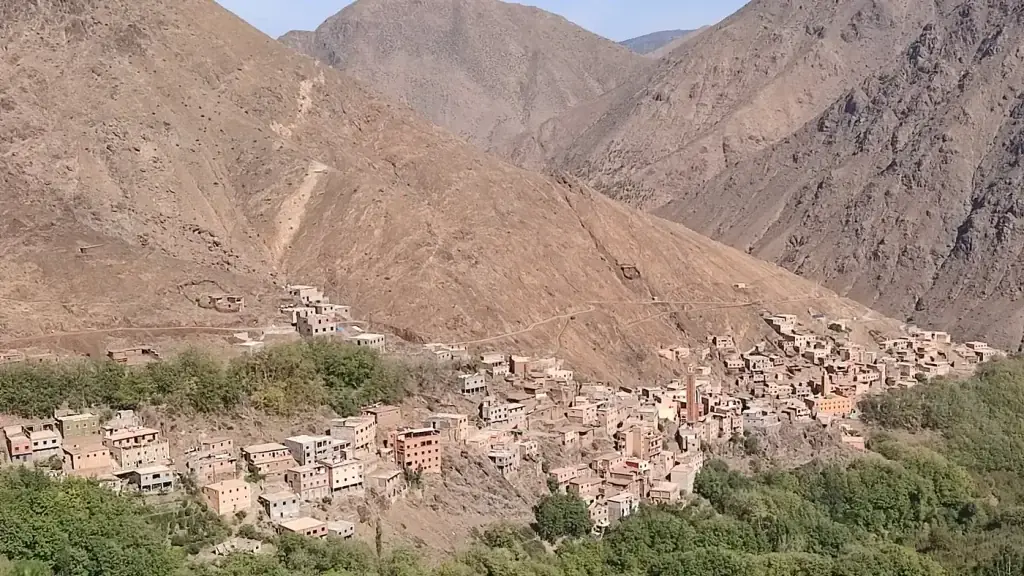
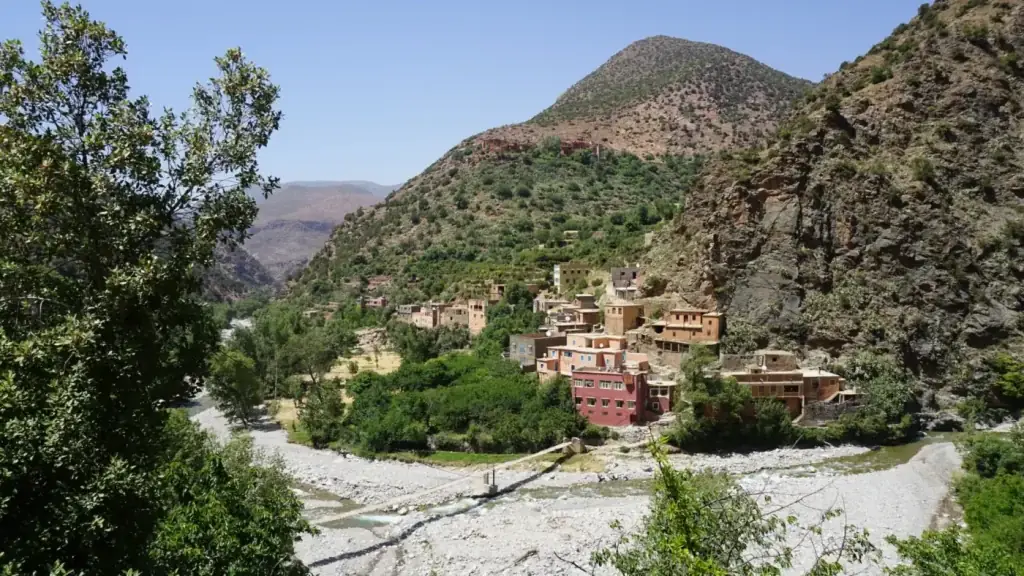
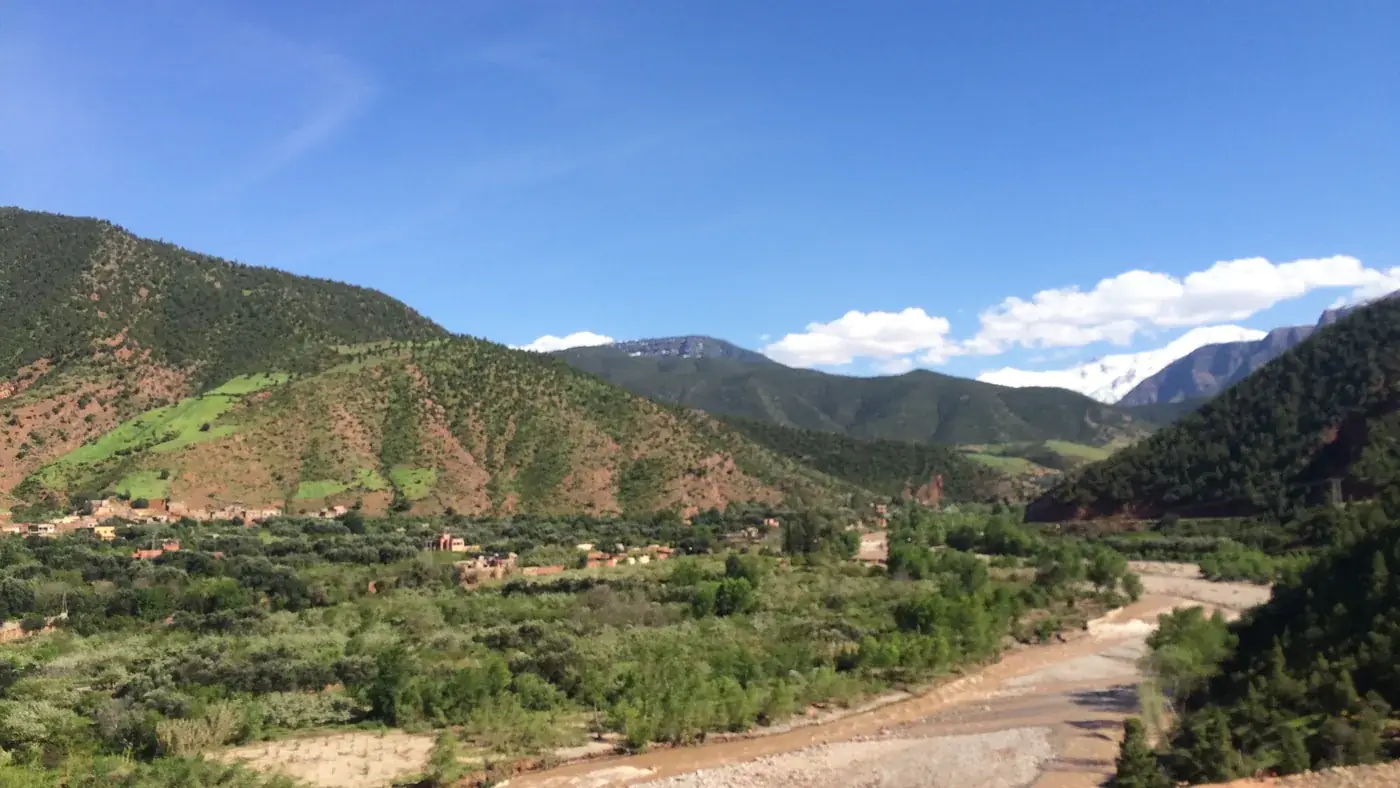
It is a river valley of the High Atlas, south-east of Marrakech, which runs from the market town of Tnine Ourika up to the village of Setti Fatma at the end of the paved road. The Ourika river has carved a green corridor through red mountains, with orchards, walnut trees, terraced fields and Amazigh villages built in earth and stone on the slopes.
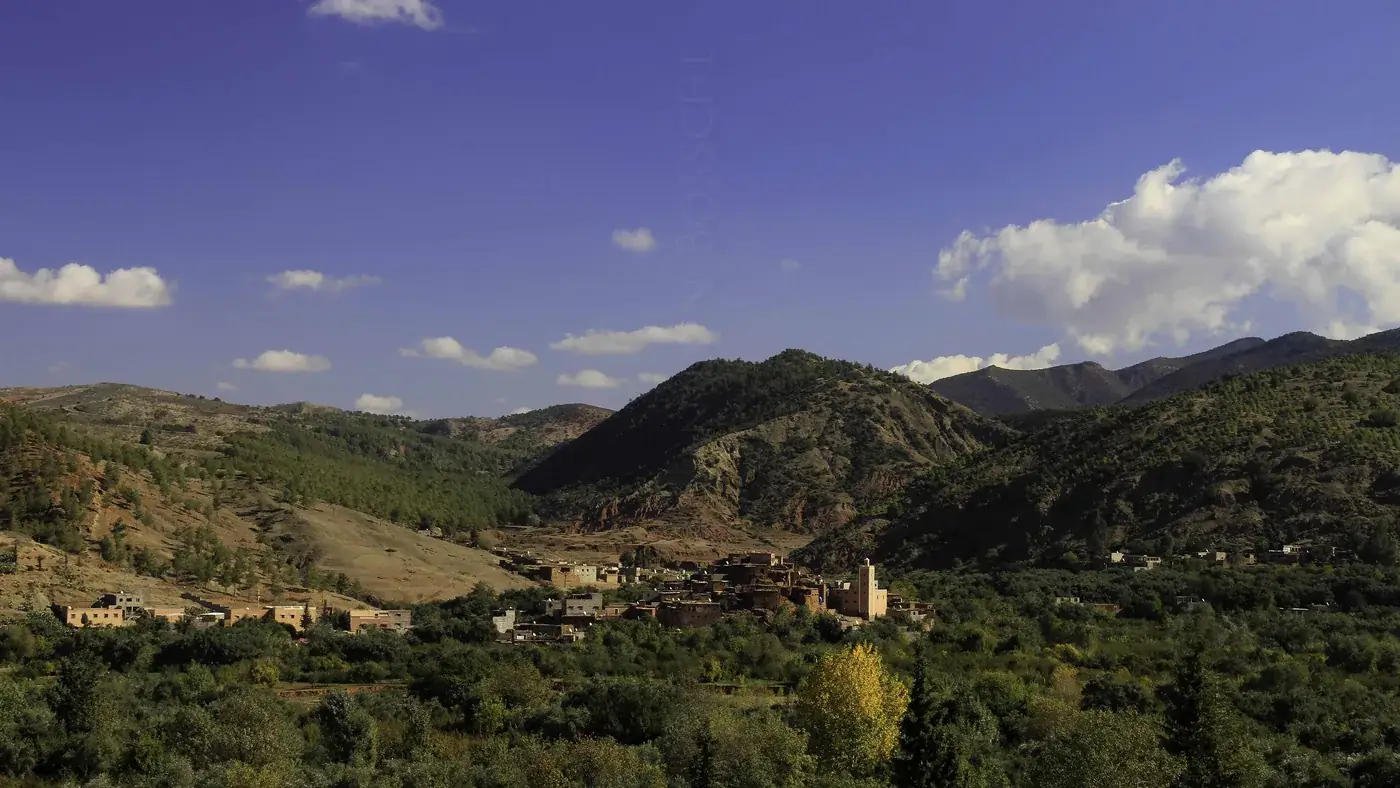
Travel guides such as Frommer’s describe the valley as one of the most popular escapes from Marrakech, with two main destinations: Setti Fatma at the end of the road, and the ski resort of Oukaïmeden, reached by a branch road. Families from Marrakech come at weekends to eat by the water, and visitors come for the waterfalls, the cooperatives and the cooler air.
Visiting the valley by car has clear advantages over a group excursion. You leave when you want, ideally before the heat and the excursion minibuses. You choose your stops instead of following a fixed programme. And you can stay for a late lunch by the river, then drive back at your own pace, as long as you are in Marrakech before dark.
How far is the Ourika Valley from Marrakech and how long is the drive?
The valley begins at Tnine Ourika, around 30 to 35 km from Marrakech, and the road ends at Setti Fatma, around 62 to 65 km from the city according to travel guides. Plan about an hour and a half each way to Setti Fatma in normal traffic.
Most of the time goes on the second half of the drive. The first part across the plain is fast and straight; after Tnine Ourika, the road follows the river through bends and village centres where traffic slows. At weekends and on public holidays, when families from Marrakech head to the riverside restaurants, the same drive can take noticeably longer, especially on the way back in the late afternoon.
| Stage | Distance (approx.) | Time (estimate) | What to expect |
|---|---|---|---|
| Marrakech to Tnine Ourika | 30 to 35 km | 35 to 45 min | Straight road across the Haouz plain |
| Tnine Ourika to Aghbalou | About 15 km | 20 to 25 min | Gardens, cooperatives, first riverside cafés |
| Aghbalou to Setti Fatma | About 15 km | 20 to 30 min | Narrower road, bends, village centres |
| Total to Setti Fatma | 62 to 65 km | About 1 h 30 | Longer at weekends |
What is the route from Marrakech to Setti Fatma, step by step?
The route to Setti Fatma follows a single road, the Route de l’Ourika, from the south-east of Marrakech to the end of the valley, so navigation is simple. Here is the drive in order, with times given as estimates.
- Leave Marrakech to the south-east (0 min). Follow the signs for the Route de l’Ourika. From the Medina, the exit is through the southern districts; from Gueliz or Hivernage, use the ring road.
- Cross the Haouz plain (10 to 35 min). The road runs straight between olive groves, nurseries, pottery stalls and new housing. Respect the speed limits at the entrance of each village.
- Reach Tnine Ourika (about 40 min). The market town at the entrance of the valley. Its name refers to Monday, the day of its weekly souk.
- Drive past the gardens and cooperatives (40 to 60 min). Botanical gardens and women’s argan cooperatives line the road. Choose one stop on the way up or on the way back.
- Arrive at Aghbalou (about 60 min). At this junction, a branch road climbs to Oukaïmeden. Stay on the main valley road for Setti Fatma.
- Follow the river (60 to 85 min). The valley narrows, restaurants set tables above the water, and the road winds through small villages.
- Park in Setti Fatma (about 90 min). Leave the car at the entrance of the village and continue on foot.
Which villages and stops are worth it along the valley?
The stops most worth making in the valley are Tnine Ourika for its Monday souk, a garden or cooperative on the lower road, a riverside terrace for lunch and Setti Fatma for the waterfalls. You do not need to see everything: two or three stops make a relaxed day.
- Tnine Ourika: the Monday market draws people from all the villages of the valley. Arrive early, and drive slowly in the centre.
- Gardens and cooperatives: several botanical gardens and argan cooperatives welcome visitors along the lower valley.
- Riverside terraces: from the middle of the valley, restaurants place tables and cushions on platforms right above the water. Lunch here is part of the experience.
- Setti Fatma: the end of the paved road, with cafés, small shops and the start of the path to the waterfalls. A moussem, a traditional festival, takes place there each August.
Which car suits the Ourika Valley?
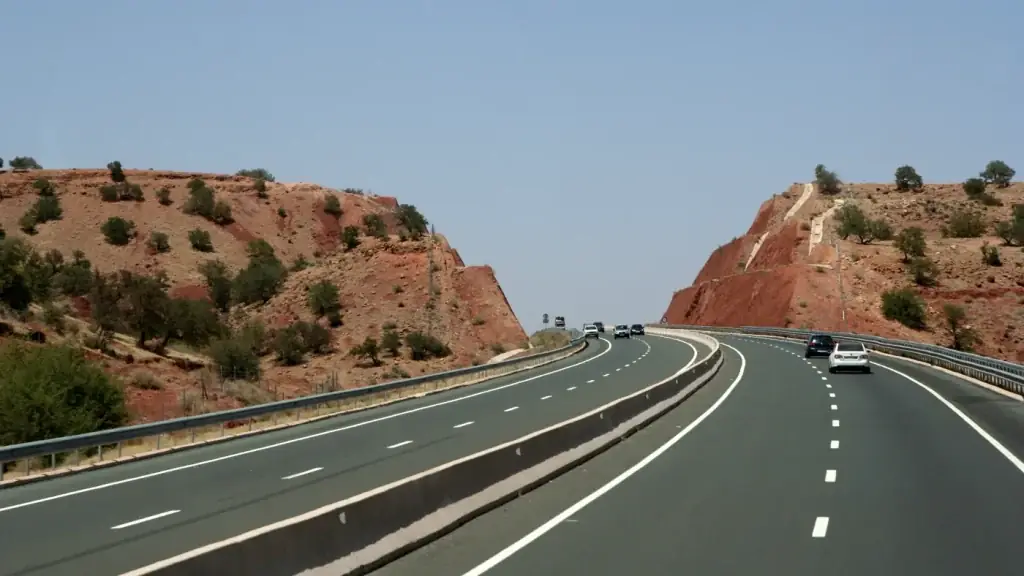
Any car in good condition is fine for this trip, because the road is paved all the way to Setti Fatma and there is no mountain pass to cross. The real question is comfort in traffic, space for your group and ease of parking in narrow village streets.
- City car (Hyundai Grand i10, Hyundai Accent, Renault Clio 5): easy to park in Setti Fatma and in village centres, ideal for a couple.
- Compact SUV (Renault Arkana, Hyundai Tucson): more space and comfort for four adults and a higher view over the valley. The Renault Arkana is a popular choice for this trip, with an automatic gearbox.
- All-wheel drive (Volkswagen Touareg, Range Rover Sport): only useful if you add the climb to Oukaïmeden in winter.
Our main advice concerns the gearbox. On a busy weekend, the road through the Ourika Valley turns into stop-and-go traffic on a slope, and an automatic is far more pleasant than a manual clutch. Most of our fleet is automatic: see our page on automatic car rental in Marrakech to compare models.
Where do you park in Setti Fatma and how do you reach the waterfalls?
You park in Setti Fatma in the car parks at the entrance of the village, before the footbridges over the river, then walk to the waterfalls. Attendants usually guide you to a space and keep an eye on the cars during the day.
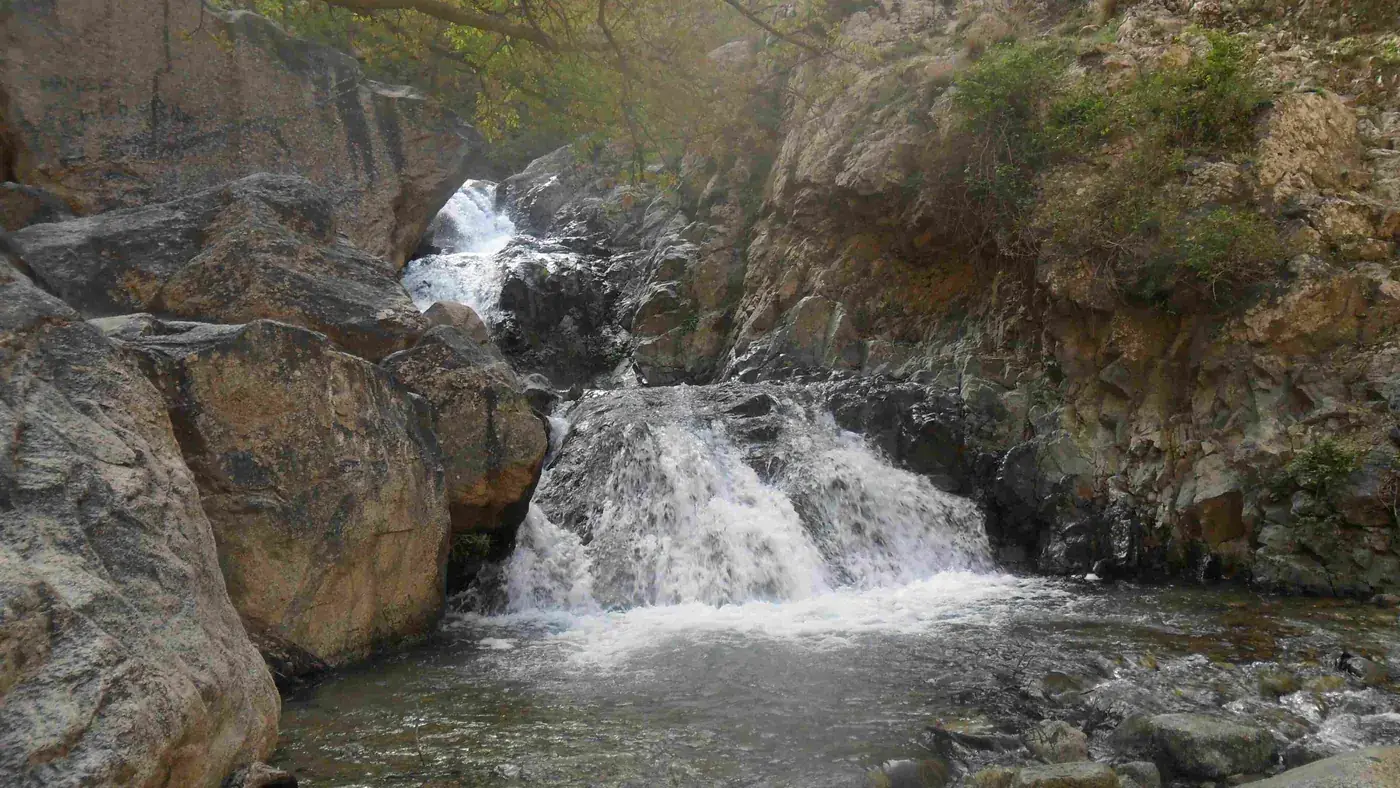
Agree on the arrangement with the attendant when you arrive, lock the car and leave nothing visible on the seats. From the village, the path to the waterfalls crosses the river and climbs over rocks and stone steps. Travel guides describe a series of seven waterfalls above the village. The first one is the easiest to reach; the higher ones require more scrambling, and the rocks are slippery after rain.
Local guides wait near the start of the path and offer to show the way. Their help is useful if you want to go beyond the first waterfall or if you are walking with children. Wear shoes with good grip, carry water and keep your hands free for the steep passages.
| Plan | Time on site | Difficulty | Tip |
|---|---|---|---|
| Lunch by the river, no hike | 1 to 2 hours | Easy | Choose a terrace in the middle of the valley |
| First waterfall of Setti Fatma | 1 to 1.5 hours | Moderate | Good shoes, water |
| Higher waterfalls | 2 to 3 hours | Harder, rocky | Consider a local guide |
| Oukaïmeden detour | Half a day extra | Mountain road | All-wheel drive in winter |
What is there to do in Setti Fatma, at the end of the Ourika road?
In Setti Fatma, at the end of the Ourika road, you can walk to the waterfalls, have lunch on a terrace above the river, browse the small shops of the village and simply watch life in a High Atlas village. Most visitors spend two to four hours there before driving back down the valley.
- The waterfalls: the main reason to come. The path starts across the footbridges and climbs to the first fall, with the higher falls for confident walkers.
- Riverside lunch: tagines and grilled meat served on terraces and platforms over the Ourika river. Choose a place with a clear view of the water level.
- The village: earth and stone houses on the slopes, small grocery shops and cafés along the main street.
- The August moussem: a traditional festival that brings crowds from the whole region. Expect heavy traffic on the Ourika road on those days.
Setti Fatma is also a starting point for longer hikes into the surrounding mountains with a local guide. If you would like to explore other valleys of the range, our guide to the Atlas Mountains by car from Marrakech compares the routes south of the city, and our guide to day trips from Marrakech by car lists the outings that fit into one day.
When is the right season to visit the Ourika Valley?
Spring is the most attractive season, with flowering orchards, green terraces and waterfalls full of snowmelt. Each season has its own character, though, and the valley is pleasant all year if you plan around the weather.
- Spring (March to May): green landscapes, strong waterfalls, mild days. Busy on public holidays.
- Summer (June to September): the valley is cooler than Marrakech, so it fills up with families at weekends. Afternoon storms are possible in the mountains.
- Autumn (October and November): quieter, with soft light and comfortable temperatures.
- Winter (December to February): calm and fresh, with snow on the peaks. Days are short, so leave early.
Is the Ourika Valley safe when storms hit?
The valley is safe on a normal day, but the river can rise very quickly after heavy rain in the mountains, and storms are the one risk that visitors must take seriously. On 17 August 1995, violent storms caused a deadly flood in the valley, which hit the area around Tnine Ourika and Setti Fatma, as Médias24 recalls. Setti Fatma was largely rebuilt afterwards.
The danger comes from rain falling higher up, sometimes while the sky above the valley is still clear. A few simple rules keep you safe:
- Check the mountain forecast for the High Atlas before you leave, in addition to the forecast for Marrakech.
- Leave the riverbed at once if you hear thunder, see dark clouds over the peaks or notice the water turning brown.
- Never park on the gravel banks of the river, however convenient they look.
- Follow local advice. Restaurant owners and guides watch the river closely and know when to move people.
- Drive back before nightfall. The valley road has little lighting, and the Canadian government’s travel advice for Morocco recommends avoiding night driving.
What are the local tips for a day in the Ourika Valley?
Our main local tip is to leave Marrakech before 9 a.m. and drive straight to Setti Fatma, then make your stops on the way back, when the morning crowds have moved up the valley. Here is what our team tells guests before they set off.
- Go on a weekday if you can. Weekends and public holidays bring heavy traffic from Marrakech.
- Bring a light jacket. The valley is cooler than the city, especially in the shade near the water.
- Carry water and some snacks for the walk to the waterfalls.
- Keep your phone charged and the Choumacars number saved, in case you need help with the car.
- Plan Imlil for another day. It is reached by a different road. Our guide on Imlil by car from Marrakech covers that route.
Which mistakes should you avoid in the Ourika Valley?
The most common mistake here is visiting on a Sunday afternoon and spending a long time in traffic on the way back to Marrakech. The others are just as easy to avoid.
- Parking on the riverbanks or on gravel near the water.
- Climbing the waterfalls in sandals. The rocks are steep and slippery.
- Ignoring the weather in the mountains during summer afternoons.
- Stopping in the middle of the road for photos in a village centre. Use car parks and lay-bys.
- Leaving valuables visible in the parked car.
- Driving back after dark on a road with little lighting and many pedestrians.
Wondering whether a car is right for your stay? Read our guide is it worth renting a car in Marrakech.
Frequently asked questions
How far is the Ourika Valley from Marrakech?
The valley starts at Tnine Ourika, around 30 to 35 km from Marrakech, and the road ends at Setti Fatma, around 62 to 65 km from the city. Plan about an hour and a half each way to Setti Fatma, more at weekends when local traffic is heavy.
Is it easy to drive in the Ourika Valley?
Yes. The road is paved and well used, with no mountain pass to cross on the way to Setti Fatma. The difficulty comes from traffic in village centres, pedestrians and parked minibuses. Drive slowly, keep your distance and choose an automatic car if you dislike hill starts in busy traffic.
Do I need a 4×4 for the Ourika Valley?
No. A city car or a compact SUV is enough for the road to Setti Fatma. All-wheel drive is useful only if you add the branch road from Aghbalou to Oukaïmeden in winter, when snow can cover the upper bends.
Where do I park to see the Setti Fatma waterfalls?
Park in one of the car parks at the entrance of Setti Fatma, before the footbridges. Attendants usually direct you to a space. From there, the path to the waterfalls crosses the river and climbs over rocks, so wear shoes with good grip.
Can I visit the Ourika Valley and Imlil on the same day?
It is possible but tiring, because the two valleys are reached by different roads from Marrakech. Most guests give each its own day: Ourika for waterfalls and riverside lunches, Imlil for mountain walks and views of Toubkal.
Is the Ourika Valley dangerous in summer?
Not on a normal day, but summer storms in the mountains can make the river rise very fast. Check the High Atlas forecast, leave the riverbed if thunder starts, and never park on the gravel banks. The valley suffered a deadly flood on 17 August 1995.
Can Choumacars deliver the car to my hotel for the Ourika Valley?
Yes. Choumacars delivers anywhere in Marrakech and the surrounding area, 24/7, and meets you at Menara airport. Insurance is included and mileage is unlimited, so the round trip fits easily into any rental.
What do I need to rent a car for the Ourika Valley?
You must be at least 22, have held your driving licence for at least 2 years and show your passport or national ID. A second driver can be added on the same conditions. Choose your dates and car, add your name and phone number, then confirm on WhatsApp.
Ready to drive the Ourika Valley?
Choose your dates, pick a car from our fleet, add your name and phone number, then confirm with us on WhatsApp. For longer stays and other trips, see our page on car rental in Marrakech. We will be glad to help you plan your day in the valley.